Shipping Terms & Handling
Comprehensive guide to shipping terms, container handling, and liner transportation rules. Understand the responsibilities of carriers and shippers in global logistics.
Quick Reference
Essential shipping terms and their definitions
Common Terms
Liner Shipping Terms
Understanding carrier responsibilities and port operations
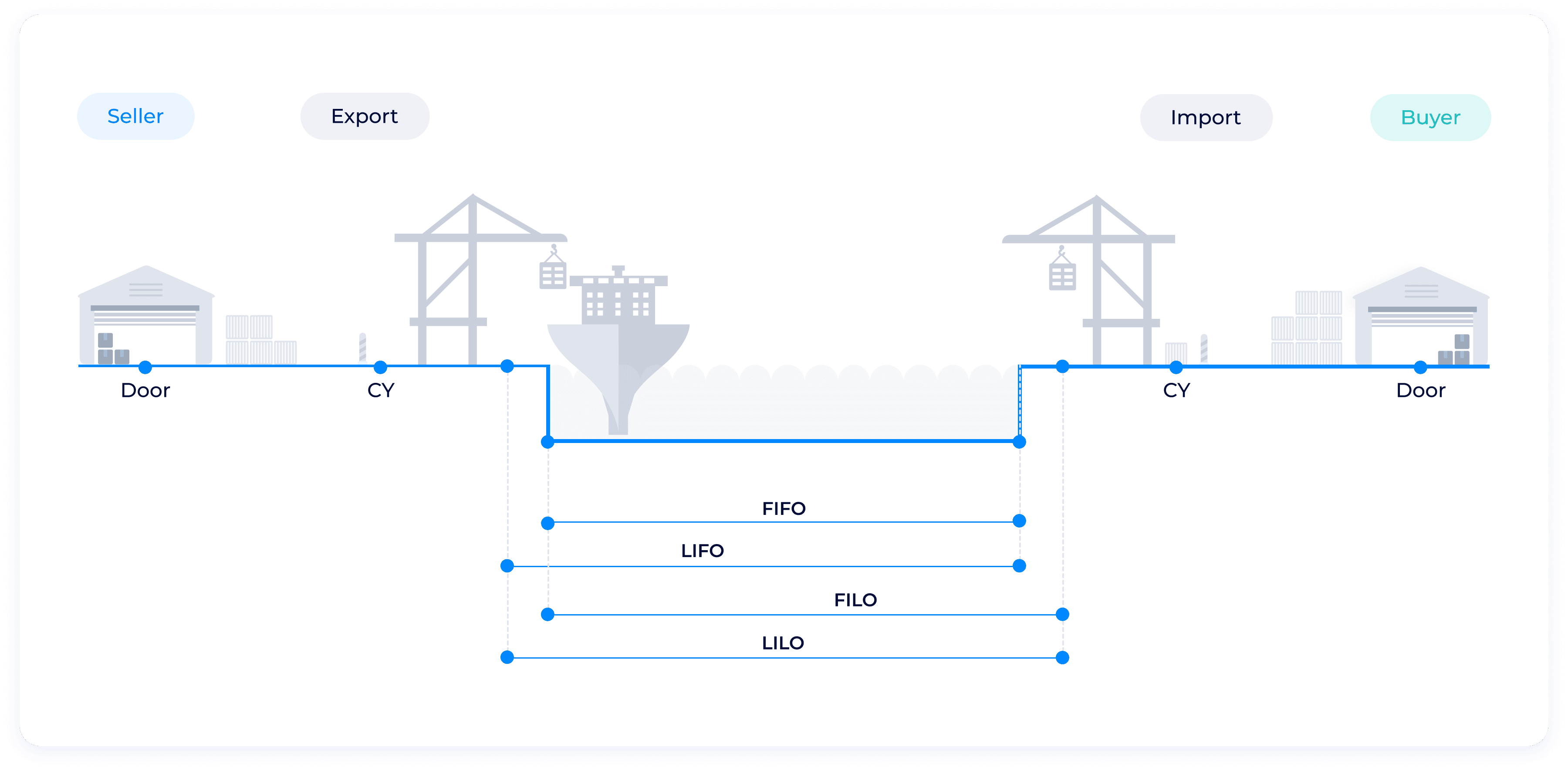
This diagram illustrates the division of responsibilities between carriers and shippers under standard liner terms. Carriers are responsible for goods from loading onto the vessel until discharge at the destination port.
Liner shipping terms define the responsibilities and liabilities of carriers and shippers during the transportation process. These terms are crucial for understanding who bears the risk at each stage of the shipping journey.
The most common liner terms specify that the carrier's responsibility begins when goods are loaded onto the vessel at the port of loading and ends when goods are discharged from the vessel at the port of destination.
Key Principle
Under standard liner terms, the carrier is responsible for sea transport and port handling, while shippers and consignees handle inland transportation and documentation.
Container Handling Procedures
Standard operating procedures for container handling at ports
Gate-In
Container arrival at terminal gate, documentation check, and positioning for stacking.
Vessel Operations
Loading/discharge operations using quay cranes, vessel stability considerations.
Yard Operations
Container stacking, repositioning, and storage in the container yard.
Frequently Asked Questions
What are Free Time and Demurrage?
Free time is the period during which containers can be stored at the terminal without incurring charges. Demurrage charges apply when containers exceed the free time allowance.
What is the difference between CY and CFS?
CY (Container Yard) is for full container operations, while CFS (Container Freight Station) is for LCL cargo consolidation and deconsolidation.
Who is responsible for container damage?
Responsibility depends on when damage occurred. Carriers are responsible during their custody period, while shippers/consignees are responsible during inland transport and stuffing/stripping.
What are standard free time periods?
Typically 3-7 days for import containers and 5-10 days for export containers, but this varies by port and carrier.